RSI Divergence AlertRSI Divergence Alert Input: range Bullish RSI Divergence yellow Bearish RSI Divergence red Chỉ báo Pine Script®của jordan.fan.basketCập nhật 1190
08-2018 Stochastic 5m [ALERT SETUP] [INDICATOR]This is an accumulation of small buy orders and a complete sell order strategy, that can be used for manual trading or for a trading bot. The strategy is based on stockastic divergences ( an indicator that I made myself and is published on my profile earlier ), and I added my personnal touch of course. Note that the bullish and bearish stochastic divergences are calculated separately and can be configured in the inputs. To be used with a 5m timeframe, and on a flat or bullish pair. Everyone can favorite the script, apply it to the chart, but only I can see or modify the code. If you need anything, leave a comment, thanks :D More info about the script, such as inputs description, how to configure the script, strategy explanation, alert configuration can be found here : blockchainfiesta.com -------------------------------------------------------------------------------------------------------------- I do commission work: TradingView Pine Script development & Reverse Engineering. contact@blockchainfiesta.com. You can also send me a message in TradingView or Discord (discord.gg) Bitcoin address: 19sVQvCDmVfEACq7BiMnWSMqFPZ8qfSQ2K ETH address: 0xc8a5d3a63a05db0c2363ea1c08b37a01cce9ebfbChỉ báo Pine Script®của cyatophilum95
RSI_EMA & Bearish EngulfingThis is a RSI-RSI of EMA and bearish candlestick reversal pattern formed by two candlesticks. Following an uptrend, the first candlestick is a up candlestick which is followed by a down candlestick which has a long real body that engulfs or contains the real body of the prior bar. following an uptrend, if RSI and EMA line cross then Sell and for downtrend if RSI and EMA line cross then Buy.Chỉ báo Pine Script®của PremRajendra23
Stochastique Divergences IndicatorHello, I made a custom indicator. Divergences with stochastique and price are really strong signals. About the indicator A bullish divergence happens when the stoch K makes a higher low and is depicted by a green triangle up. A bearish divergence happens when the stoch K makes a lower high and is depicted by a red triangle down. This script is the base for my next strategy that I should upload soon. I will grant access (to this script and my others) to people willing to make a small donation. Here is my BTC address : 19sVQvCDmVfEACq7BiMnWSMqFPZ8qfSQ2K If you prefer ETH : 0xc8a5d3a63a05db0c2363ea1c08b37a01cce9ebfb Send me a Private Message with the ID of the transaction If you want to do some forward testing first, send me a message. Also check blockchainfiesta.comChỉ báo Pine Script®của cyatophilum2244
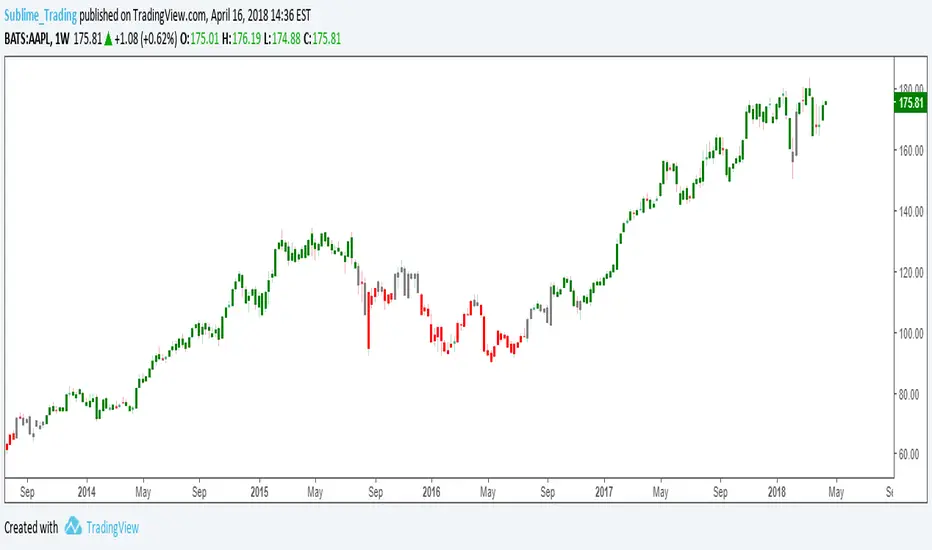
wTF50This is a customized trend filter that has several uses: It helps identify trend direction, either bullish or bearish It distinguishes between a pullback and a trend reversal It helps identify areas where traders should stand aside It highlights areas of consolidationChỉ báo Pine Script®của Sublime_Trading6636
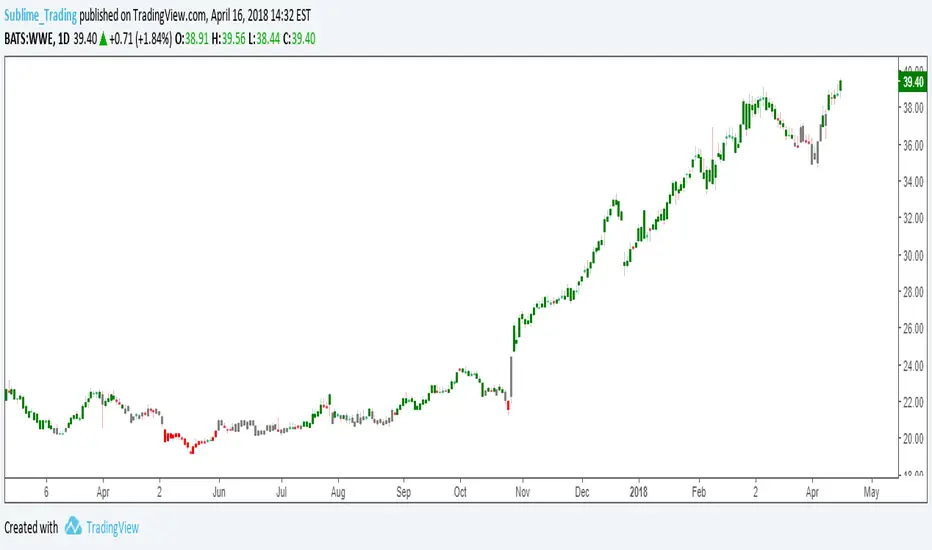
dTF50This is a customized trend filter that has several uses: It helps identify trend direction, either bullish or bearish It distinguishes between a pullback and a trend reversal It helps identify areas where traders should stand aside It highlights areas of consolidationChỉ báo Pine Script®của Sublime_Trading2223
OBV divergence hidden and regular on both bearish and bullish.OBV (on balance volume) divergence indicator with hidden and regular signal on both bearish and bullish.Chỉ báo Pine Script®của Patternsmart99123
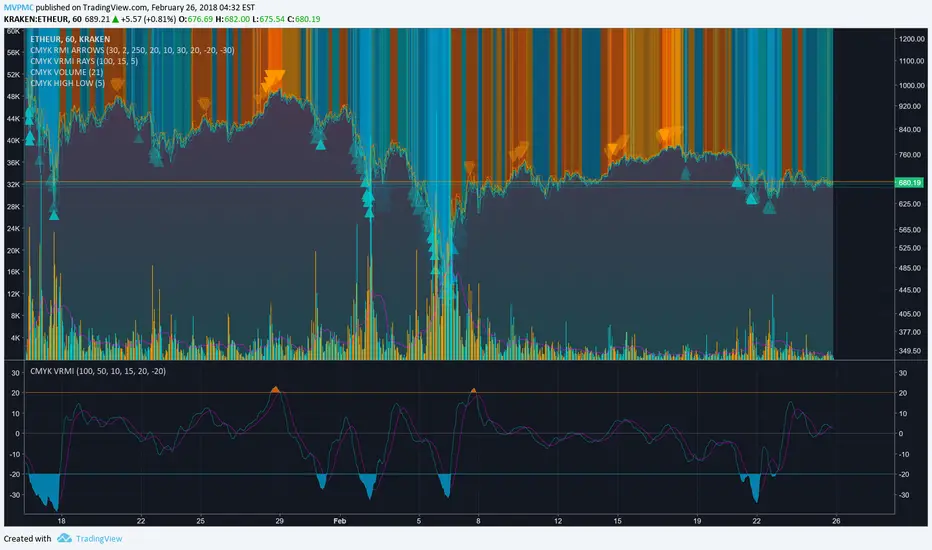
CMYK VRMI◊ Introduction This script indicates the relative movement of price x volume. ◊ Origin Based on 'The Relative Momentum Index' by Roger Altman : February, 1993 issue of Technical Analysis of Stocks & Commodities magazine. While RSI counts up and down days from close to close, the Relative Momentum Index counts up and down days from the close relative to a close x number of days ago. This results in an RSI that is smoother. The input has been changed to the change of a smoothed close multiplied by a smoothed volume. The polarity of VRMI indicates bearish/bullish movement. ◊ Adjustments CMYK color theme applied. ◊ Usage VRMI indicates the force the market moves with. ◊ Future Prospects - ◊ ◊ ◊ ◊ ◊ ◊ ◊ ◊ ◊ ◊ ◊ ◊ ◊ ◊ ◊ ◊ ◊ ◊ ◊ ◊ ◊ ◊ ◊ ◊ ◊ ◊ ◊ ◊ ◊ ◊ ◊ ◊ ◊ ◊ ◊ ◊ ◊ ◊ ◊ ◊ ◊ ◊ ◊ ◊ ◊ ◊ ◊ ◊ ◊ ◊ ◊ ◊ ◊ ◊ ◊ ◊ ◊ ◊ ◊ ◊ ◊ ◊ ◊ ◊ ◊ ◊ ◊ ◊ ◊ ◊ ◊ ◊ ◊ ◊ ◊ ◊ ◊ ◊ ◊ ◊ ◊ ◊ ◊ ◊ ◊ ◊ ◊ ◊ ◊ ◊ ◊ ◊ ◊ ◊ ◊ ◊ ◊ ◊ ◊ ◊ ◊ ◊ ◊ ◊ ◊ ◊Chỉ báo Pine Script®của MVPMC113
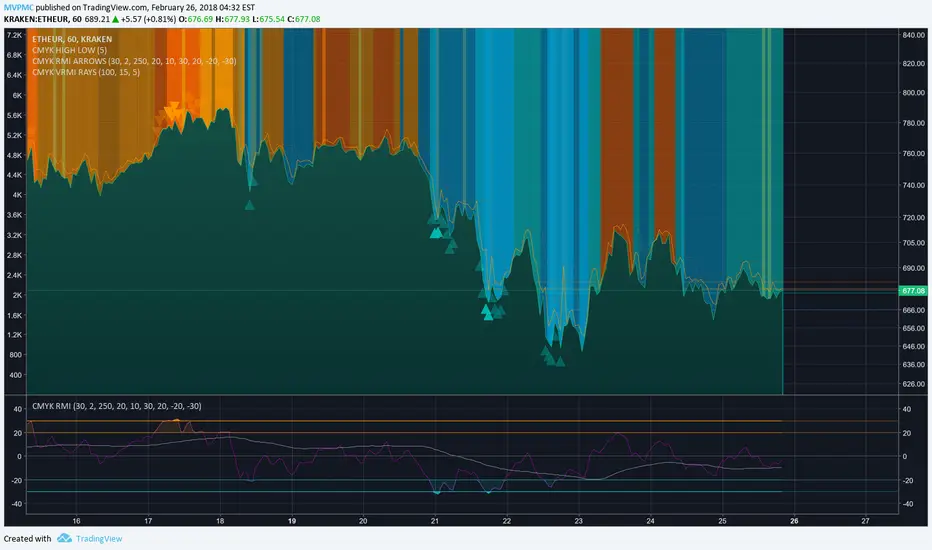
CMYK VRMI RAYS ◊ Introduction Introducing VRMI in this script, an RMI based on price movement and volume, to indicate bullish and bearish trends. This script marks the background depending on RMI <> VRMI , VRMI polarity and large buy/sell sprees. ◊ Origin Based on 'The Relative Momentum Index' by Roger Altman : February, 1993 issue of Technical Analysis of Stocks & Commodities magazine. While RSI counts up and down days from close to close, the Relative Momentum Index counts up and down days from the close relative to a close x number of days ago. This results in an RSI that is smoother. In addition VRMI reacts quick, it is used to cut off latency from RMI, and it's polarity indicates the beginning and end of a trend. Large buy sell sprees and detected in their proportion with an sma on the volume ◊ Adjustments CMYK color theme applied. ◊ Usage This indicator can be used to detect trends and mark reversals. ◊ Prospects ◊ ◊ ◊ ◊ ◊ ◊ ◊ ◊ ◊ ◊ ◊ ◊ ◊ ◊ ◊ ◊ ◊ ◊ ◊ ◊ ◊ ◊ ◊ ◊ ◊ ◊ ◊ ◊ ◊ ◊ ◊ ◊ ◊ ◊ ◊ ◊ ◊ ◊ ◊ ◊ ◊ ◊ ◊ ◊ ◊ ◊ ◊ ◊ ◊ ◊ ◊ ◊ ◊ ◊ ◊ ◊ ◊ ◊ ◊ ◊ ◊ ◊ ◊ ◊ ◊ ◊ ◊ ◊ ◊ ◊ ◊ ◊ ◊ ◊ ◊ ◊ ◊ ◊ ◊ ◊ ◊ ◊ ◊ ◊ ◊ ◊ ◊ ◊ ◊ ◊ ◊ ◊ ◊ ◊ ◊ ◊ ◊ ◊ ◊ ◊ ◊ ◊ ◊ ◊ ◊ ◊ Chỉ báo Pine Script®của MVPMCCập nhật 75
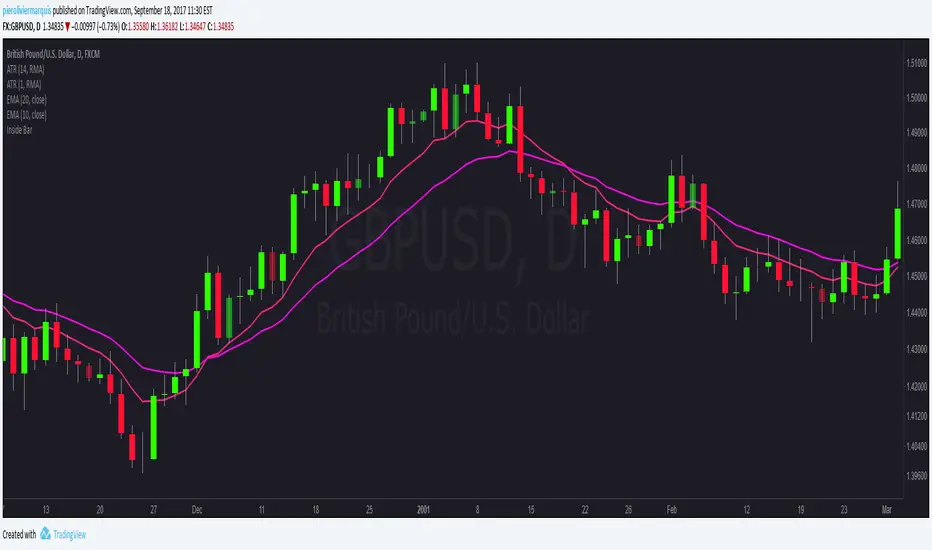
Inside Bar with bullish and bearish colorInside Bar with bullish and bearish colorChỉ báo Pine Script®của pieroliviermarquis2222 1.2 K
Bullish and Bearish Engulfing Patterns auto detectionThis simple indicator detects automatically most important bullish and bearish candlestick patterns formations. Used to locate potential supply and demand imbalances. Copyright 2017 Alfonso Moreno www.set-and-forget.comChỉ báo Pine Script®của AlfonsoMoreno5959 3.8 K
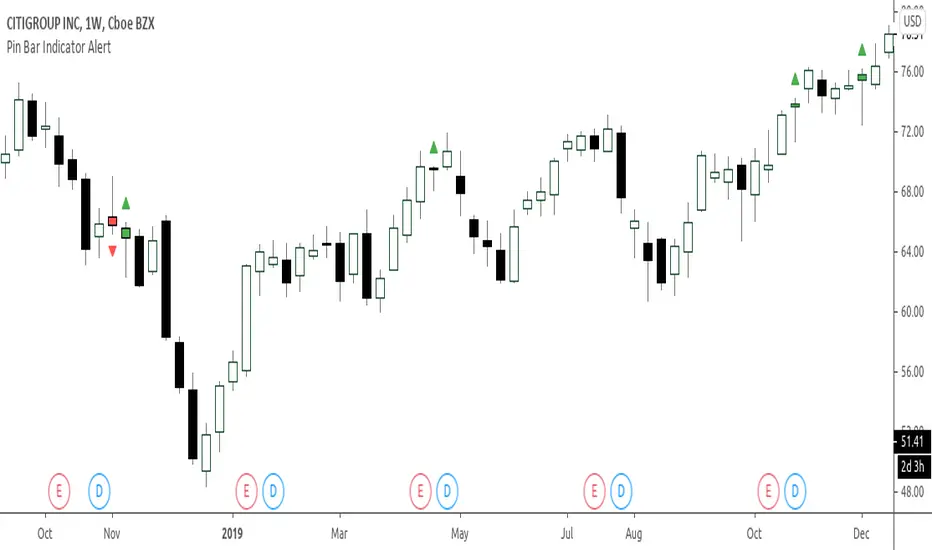
Pin barSource code that allows to find bullish or bearish pin bars in any asset.Chỉ báo Pine Script®của cmaCập nhật 1111 1.8 K
Super Envolvente (Bullish y Bearish)Identificador de Super-envolventes (SE), se encarga de darle un color verde a la SE alzista (Bullish) verde y rojo a la bajista (Bearish). Chỉ báo Pine Script®của cma262
MaayaBearishPROD_v10_Nov2025bearish analysis bearish analysis bearish analysis bearish analysisChiến lược Pine Script®của jithinlal4trading1
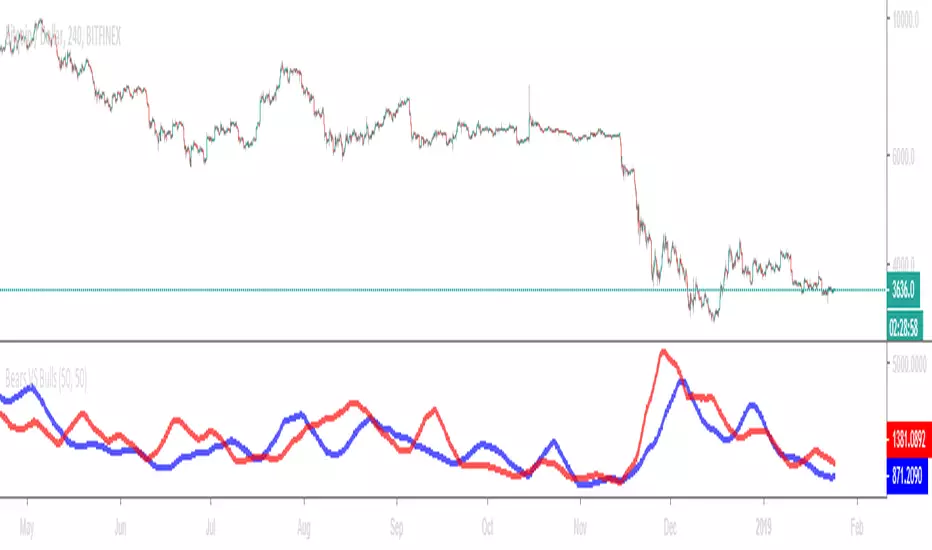
Bears VS BullsThis indicator will work on ANY instrument. The red line is a moving average of ONLY sellers in the market. The blue line is a moving average of ONLY buyers in the market. The period or "length" of the individual moving averages can be adjusted in the indicator settings. The default, it is set to 50. Buying and selling trends often provide indications of market moves such as the most recent bottom in Cryptocurrencies. Feel free to comment and share any indicator concepts or ideas for content you would like to see added to the Technical Indicator Bundle on www.kenzing.com Chỉ báo Pine Script®của GrantPeaceCập nhật 141480
Bearish Trailing stopIt is a trailing SL. Works very well. Good good very good. Looks like my description needs more, so here is more random text.Chỉ báo Pine Script®của TimeFract3
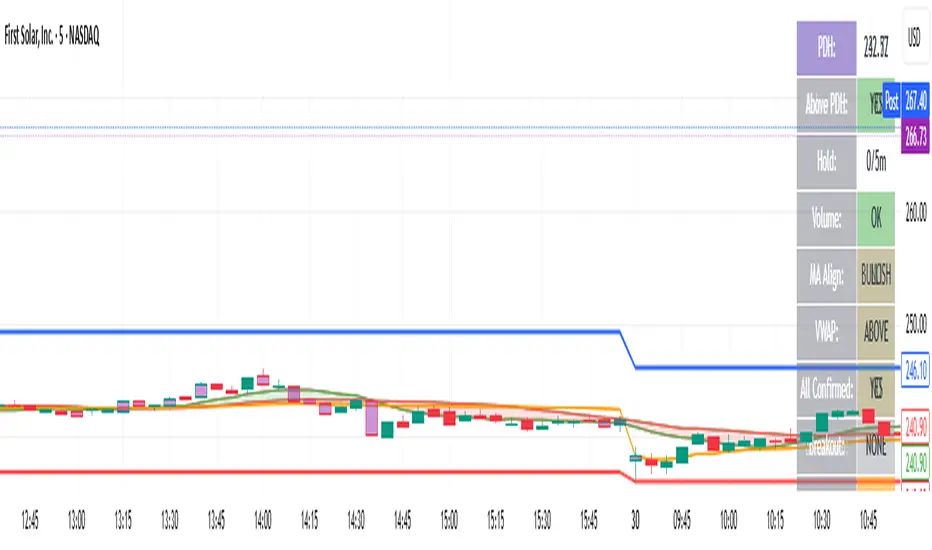
bearish Price Below PDL - Complete Multi-Confirmation Alert🎯 KEY IMPROVEMENTS: 1. Enhanced Alert Visibility:$jmoskyhigh ✅ HUGE triangle down marker with "SELL" text ✅ Alert title: "SELL SIGNAL - PDL BREAKDOWN CONFIRMED" ✅ Prominent info panel with red theme ✅ Clear "SELL ALERT: TRIGGERED" status 2. Better Visual Feedback: Red frame around info panel Larger shapes and markers Color-coded confirmations (green = OK, red = FAIL) Progress percentage displayed Breakdown price label 3. Complete Alert System: Main Alert: "SELL SIGNAL - PDL BREAKDOWN CONFIRMED" Early Warning: "PDL Breakdown Started - Monitoring" Reset Alert: "Confirmation Lost - Breakdown Reset"Chỉ báo Pine Script®của jmslimus4
Bearish 1st Breakaway SLInspried by DeLeBlanc Bullish 1st Breakaway StoplossChỉ báo Pine Script®của hoakhanh19768848
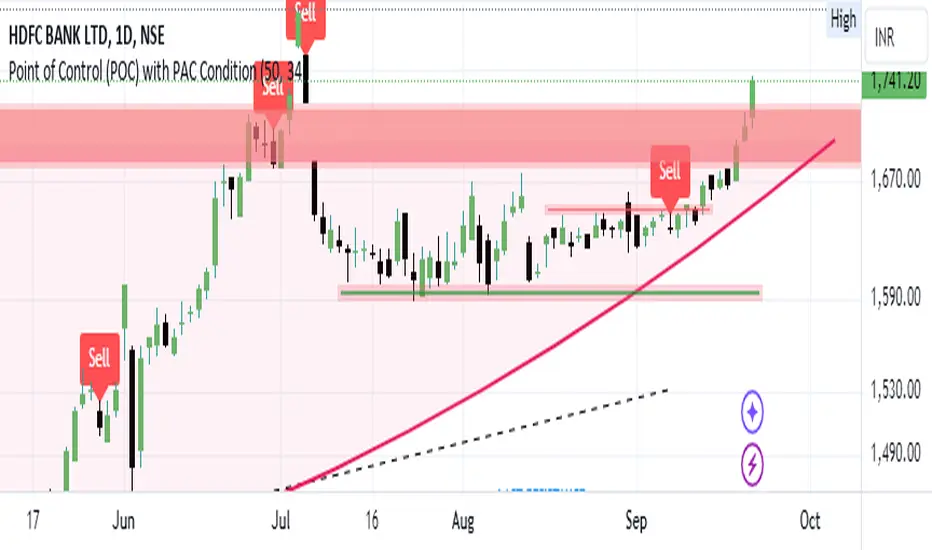
Bearish signal using Point of Control (POC) with PAC by guruThis indicator code helps traders identify potential sell opportunities using several important technical indicators: Point of Control (POC) – This is the price level where the most volume was traded over the past several days. Previous Day's Low – This shows the lowest price reached during the previous day. PAC (Price Action Channel) EMA – These are two moving averages (one based on the low price and one based on the close price) that help determine if the price is trending within a certain range. Volume SMA – This is a 3-day simple moving average (SMA) of volume, which helps filter out signals based on market activity. What the Script Does: Point of Control (POC): The script looks at the last 50 days (configurable) and calculates which price level had the highest trading volume. It then plots a red line on the chart at the POC level. This is important because it helps identify areas where there was strong market interest in the past. Volume Moving Average: The script calculates a 3-day SMA of volume, but it excludes the current day to avoid premature signals based on today’s trading. The volume SMA is used to ensure there’s enough market activity (with a threshold set to 25 units) before triggering a sell signal. Price Action Channel (PAC) EMA: The PAC consists of two exponential moving averages (EMAs): The PAC Low EMA: This is based on the low prices over the last 34 periods (configurable). The PAC Close EMA: This is based on the closing prices over the last 34 periods. These EMAs help determine if the price is trending above or below certain price levels. Sell Signal Logic: The script checks three conditions before displaying a "Sell" signal: Price Below POC and Previous Day’s Low: The close price must be below both the Point of Control (POC) and the previous day's low. Volume SMA Above 25: The 3-day volume SMA must be greater than 25. This ensures the signal only triggers when there’s enough trading volume in the market. Today’s Low is Above PAC EMAs: Today's low price must be above both the PAC low EMA and the PAC close EMA. This prevents sell signals when prices are already significantly below the PAC, indicating possible exhaustion in the downtrend. If all three conditions are met, the script will display a red "Sell" label on the chart, signaling a potential selling opportunity. No Sell Signal if Price Reverses: If the price crosses back above the POC or the previous day's low, the script will remove the sell signal and reset for a new opportunity. Summary of Conditions: For the script to display a "Sell" label: The close price must be below the Point of Control (POC) and the previous day’s low. The 3-day volume SMA (excluding today) must be greater than 25 units. The low price of the current day must be above both the PAC low EMA and the PAC close EMA. If these conditions are met, a red sell label appears on the chart as a potential signal for a short (sell) trade.Chỉ báo Pine Script®của Guru72082121240
Bearish FS Continuation S1BB - baby bar / inside bar DF - downflow, meaning 20MA below 50MA EXE - execution bar, indicator to short Mainly to identify execution bar for shorting using inside bar identification and force topChiến lược Pine Script®của vinniechase8919
Guneet-ScalperBearish trend candle color change to red with sell print Bullish trend candle color change to green with buy print thanks jas toorChỉ báo Pine Script®của jastoor1111106
Volume Weighted Trend [QuantAlgo]🟢 Overview The Volume Weighted Trend indicator identifies statistically significant trend changes by combining volume-weighted price analysis with volatility-based breakout bands. It calculates a Volume Weighted Moving Average (VWMA) as the central trend baseline, then creates dynamic upper and lower bands using Average True Range (ATR) multipliers to define normal volatility boundaries. When price breaks above the upper band or below the lower band, it signals a confirmed trend change, helping traders and investors identify directional shifts driven by both volume-weighted momentum and volatility expansion across different timeframes and markets. 🟢 How It Works The indicator's core methodology lies in its dual-layer approach combining volume weighting with volatility filtering, where trend changes require both price direction and statistical significance: vwma_basis = ta.vwma(close, vwma_length) atr_value = ta.atr(vwma_length) upper_band = vwma_basis + atr_value * atr_multiplier lower_band = vwma_basis - atr_value * atr_multiplier First, the script calculates the Volume Weighted Moving Average to establish a trend baseline that gives greater weight to periods with higher trading volume, ensuring the trend line reflects significant participation and genuine market conviction rather than low-volume noise. Then, it measures the Average True Range over the same period to quantify current market volatility: atr_value = ta.atr(vwma_length) Next, dynamic volatility bands are constructed by adding and subtracting ATR-based buffers from the VWMA baseline, creating adaptive boundaries that expand during volatile conditions and contract during calm periods: upper_band = vwma_basis + atr_value * atr_multiplier lower_band = vwma_basis - atr_value * atr_multiplier The trend state is then determined through breakout logic that requires price to exceed these volatility-adjusted boundaries: if close > upper_band trend_direction := 1 else if close < lower_band trend_direction := -1 Finally, trend change detection identifies transitions between bullish and bearish states: trend_turned_bullish = trend_direction == 1 and trend_direction != 1 trend_turned_bearish = trend_direction == -1 and trend_direction != -1 This creates a robust trend-following system that only signals directional changes when price makes statistically significant moves beyond normal volatility bounds, with volume weighting ensuring the trend reflects meaningful market activity rather than thin-volume spikes. 🟢 Signal Interpretation ▶ Bullish Trend (Price Above Upper Band): When price closes above the upper volatility band, the indicator switches to bullish mode with green/bullish coloring throughout all visual elements = Confirmed uptrend signal for trend-following long positions. The trend remains bullish until price breaks below the lower band, allowing traders to stay positioned during sustained upward momentum without premature exits on minor pullbacks within the band range. ▶ Bearish Trend (Price Below Lower Band): When price closes below the lower volatility band, the indicator switches to bearish mode with red/bearish coloring throughout all visual elements = Confirmed downtrend signal for trend-following short positions or long exit signals. The trend remains bearish until price breaks above the upper band, enabling traders to maintain directional bias through corrective moves that stay within the band boundaries. ▶ Neutral Zone (Price Between Bands): When price trades between the upper and lower volatility bands, the indicator maintains its previous trend direction = Continuation of existing trend during consolidation or normal volatility retracements. This design prevents whipsaws during sideways action by requiring price to make a significant move beyond opposite-side bands to trigger trend reversal, rather than flip-flopping on minor crosses of the VWMA center line. 🟢 Features ▶ Preconfigured Presets: Three optimized parameter sets for different trading approaches and timeframes. "Default" provides balanced trend detection for swing trading on 4-hour and daily charts, filtering noise effectively while capturing meaningful trend changes. "Fast Response" delivers quicker trend signals for intraday trading on 5-minute to 1-hour charts, with tighter bands triggering earlier on breakouts for active traders who can monitor positions closely. "Smooth Trend" focuses on major trend changes for position trading on daily to weekly timeframes, with wider bands filtering out minor fluctuations to identify only primary directional shifts. ▶ Built-in Alerts: Three alert conditions enable automated monitoring of trend changes without constant chart watching. "Bullish Trend Signal" triggers when the indicator switches to bullish mode after price breaks above the upper band, alerting for potential long entries. "Bearish Trend Signal" activates when the indicator switches to bearish mode after price breaks below the lower band, signaling potential short entries or long exits. "Trend Direction Changed" provides a combined alert for any trend transition regardless of direction, allowing traders to monitor both bullish and bearish opportunities with a single alert setup. ▶ Visual Customization: Six color presets (Classic, Aqua, Cosmic, Cyber, Neon, plus Custom) accommodate different chart backgrounds and aesthetic preferences, with coordinated bullish and bearish color schemes applied across all indicator elements. Optional neon glow effect creates layered visual emphasis around the central VWMA line with three overlapping plots at different transparencies, making the trend line more prominent and easier to track (ideal for charts with multiple indicators where visual distinction is important). Optional volatility ribbons display gradient fills between the VWMA and band boundaries, providing visual context for price position relative to breakout thresholds with adjustable band transparency (0-100%) to control prominence. Optional bar coloring tints price bars with trend-appropriate colors during bullish and bearish periods, enabling instant visual confirmation of trend state across multiple timeframes without switching between chart and indicator panels. Chỉ báo Pine Script®của QuantAlgo60
Trend Road Map█ OVERVIEW Trend Road Map is a volatility-based trend indicator built around a dynamic ATR channel that defines the current market regime and visualizes it as a structured “trend road.” Instead of relying on classic moving average crossovers, the indicator filters price movement relative to a base moving average and a minimum ATR-based deviation threshold. This removes minor fluctuations and focuses only on meaningful market shifts. █ CONCEPTS Markets spend most of their time fluctuating around equilibrium near a moving average. A strong trend begins when price moves a meaningful distance away from that average relative to current volatility. The indicator operates in three steps: - Calculates a base moving average (SMA / EMA / WMA / HMA). - Verifies whether price deviation exceeds an ATR-based minimum threshold. - Smooths the filtered average and builds a volatility channel (“Road”) around it. If price closes above the upper boundary → bullish regime activates. If price closes below the lower boundary → bearish regime activates. Additionally, the indicator includes an ATR-based distance heatmap. Market observation shows that even in strong trends, price rarely moves extremely far away from its moving average. When distance becomes relatively large compared to volatility, price often retests the MA. The heatmap visualizes this distance dynamically, helping traders assess whether the move is balanced or overstretched. █ FEATURES Minimum Deviation Filter: MA updates only when |Price – MA| > ATR × Multiplier reduces noise and false regime shifts Smoothed Trend Axis: - additional smoothing (EMA / RMA / WMA / SMA) - stabilizes the central structure of the channel Volatility Channel (“Road”): - width = ATR × Road Width Multiplier - dynamically adapts to current volatility - channel fill: • light gray – bullish regime • dark gray – bearish regime Optional Candle Coloring: - candles can reflect the active regime direction - fully toggleable in settings Regime Change Signals: - green circle below the bar → start of BULL regime - red circle above the bar → start of BEAR regime Re-entry (🚦): - appears when price re-enters the channel after a breakout - signals a return to equilibrium conditions Distance Heatmap: - vertical gradient bar displayed on the right side - smooth color transitions from neutral to warning levels - based on ATR-relative distance from the smoothed MA Heatmap settings: - Max ATR Distance for Heatmap – defines the maximum ATR distance used for scaling - Heatmap Cells – controls gradient resolution (number of segments) Dynamic Status Label: - displays current market zone (Clear Road / Normal Range / Warning Zone / Danger Zone) - automatic text color adjustment based on background brightness Alerts: - Bull Entry - Bear Entry - Re-Entry █ HOW TO USE Add the indicator to your chart → Indicators → search for “Trend Road Map” Basic interpretation: - Price above upper boundary + light gray channel fill = active bullish regime - Price below lower boundary + dark gray channel fill = active bearish regime - Price inside the channel = equilibrium / transitional phase Parameters should be adjusted depending on whether the indicator is used as a strict trend filter or as a wider price channel tool. █ APPLICATIONS Trend Road Map is primarily a trend indicator. Its main purpose is to define the active market regime and filter trading conditions. It can be used as a directional filter for momentum tools such as RSI or MACD. For example: - consider LONG signals only when a bullish regime is active - ignore signals that go against the dominant direction Channel Breakout Trading Breakouts outside the “Road” can be traded directly. However, confirmation from other tools is recommended, such as: - RSI above 50 during bullish breakout (but not extremely overbought), - increasing momentum, - no major resistance directly ahead. Price Channel / Mean Reversion (with wider bands) By increasing the Road Width multiplier, the indicator can function as a structured price channel. In this configuration, traders may apply band-to-band mean reversion strategies. As with any mean reversion approach, probability improves when combined with additional tools, such as: - pivot levels, - Fibonacci retracements, - key support and resistance zones. █ NOTES This indicator was not designed as a standalone trading strategy, but primarily as a market filtering and context tool. Parameters should be adjusted according to the instrument and, most importantly, according to the strategy and function the indicator is intended to serve (trend filter, breakout tool, or structured channel). Volatility varies significantly across markets and timeframes — optimization is essential for consistent performance.Chỉ báo Pine Script®của Uncle_the_shooter12